









Intended for veterinary professionals only

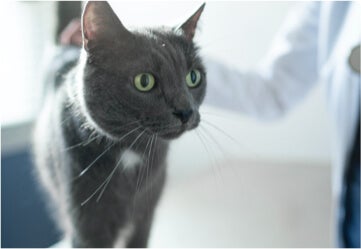
A black and white cat gets hold by her pet parent

Kidney Care

Help your renal patients hold onto more time at home

Get the latest research, protocols, and clinical recommendations for management of chronic kidney disease.

Managing Chronic Kidney Disease (CKD) in Practice

Identifying renal issues early on

  • 1 in 3 cats will develop kidney disease in their lifetime, but prevalence may be as high as 80% in cats in 15 or older1,2
  • 1 in 10 dogs will develop CKD in their lifetime3

Gut chart

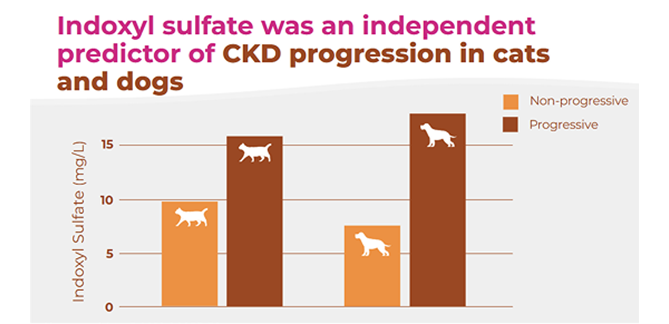
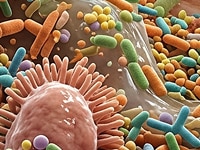
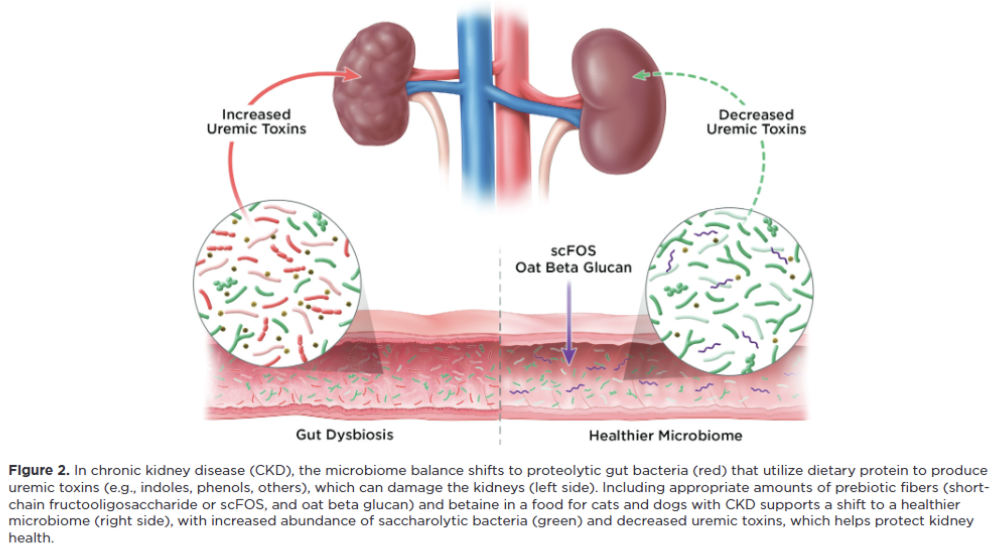
New research on the microbiome is changing our understanding of CKD progression

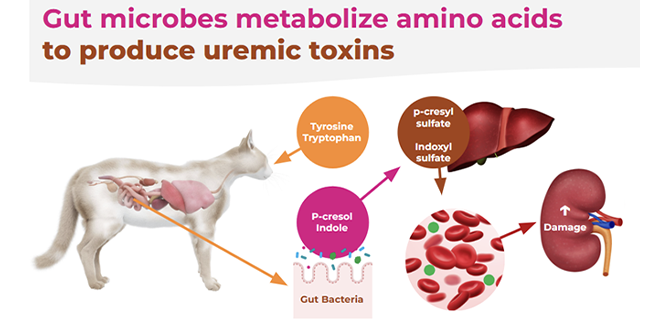
Chronic kidney disease is associated with alterations in the microbiome that result in increased production of indoxyl sulfate and 
p-cresyl sulfate as the amino acids tyrosine and tryptophan are metabolized in the gut.


Gut-derived uremic toxins have system effects that negatively impact quality of life for CKD patients:

  • Directly contribute to gastrointestinal signs, including nausea, vomiting and inappetence
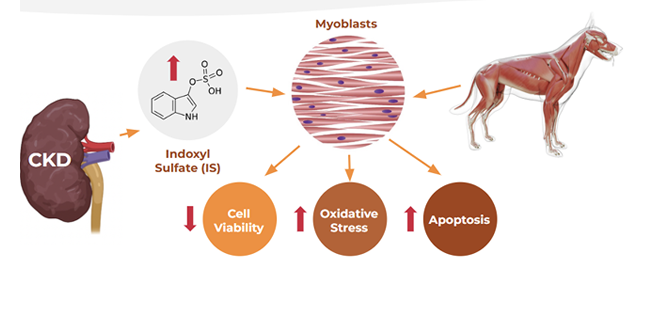
  • Drive muscle loss and cachexia over time through toxic effects on myoblasts
  • Contribute to lethargy and weakness by impairing erythropoietin synthesis, resulting in chronic anemia
  • May cause constipation through decreased colonic motility
  • Promote systemic inflammation and oxidative injury
Gut chart

Gut chart

Indoxyl sulfate specifically has also been shown to cause direct harm to renal tubular cells by⁴:

  • Inducing oxidative stress via generation of free radicals
  • Inhibiting renal tubular proliferation
  • Increasing inflammatory cytokine release
  • Promoting inflammation & fibrosis

Build a comprehensive management plan for your patients around optimizing quality of life:

  • Incorporate therapeutic renal nutrition designed to stimulate your patient’s appetite and address alterations in the microbiome seen in CKD patients
  • Consider adding appetite stimulants and anti-nausea support for patients struggling with GI issues
  • Add fluid therapy or other hydration measures for patients who need hydration support
  • Stimulate new red blood cell production with targeted therapies, which may be necessary for patients with chronic anemia secondary to CKD
Gut chart

Professional Resources for Managing Renal

Issues in Practice


Hill’s Pet Digestive Care Product Packets of Cat and Dog Food
A colorful graphic of a cat chasing a toy
Hill’s Pet Digestive Care Product Packets of Cat and Dog Food
A colorful graphic of a cat chasing a toy

Additional Professional Resources


Gut chart

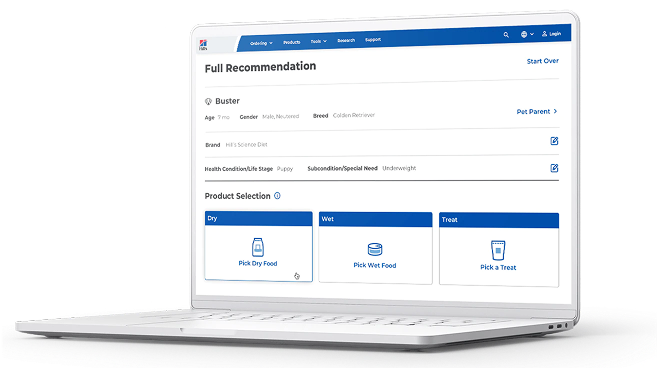
Nutrition Recommendation Tools

Need help finding the right renal food for your patient? Hill's EasyCare is a great in-clinic tool for making nutritional recommendations.
 

Three great ways to order our products


Stay Up to Date with Renal Innovations from Hill's Pet Nutrition

Gut chart

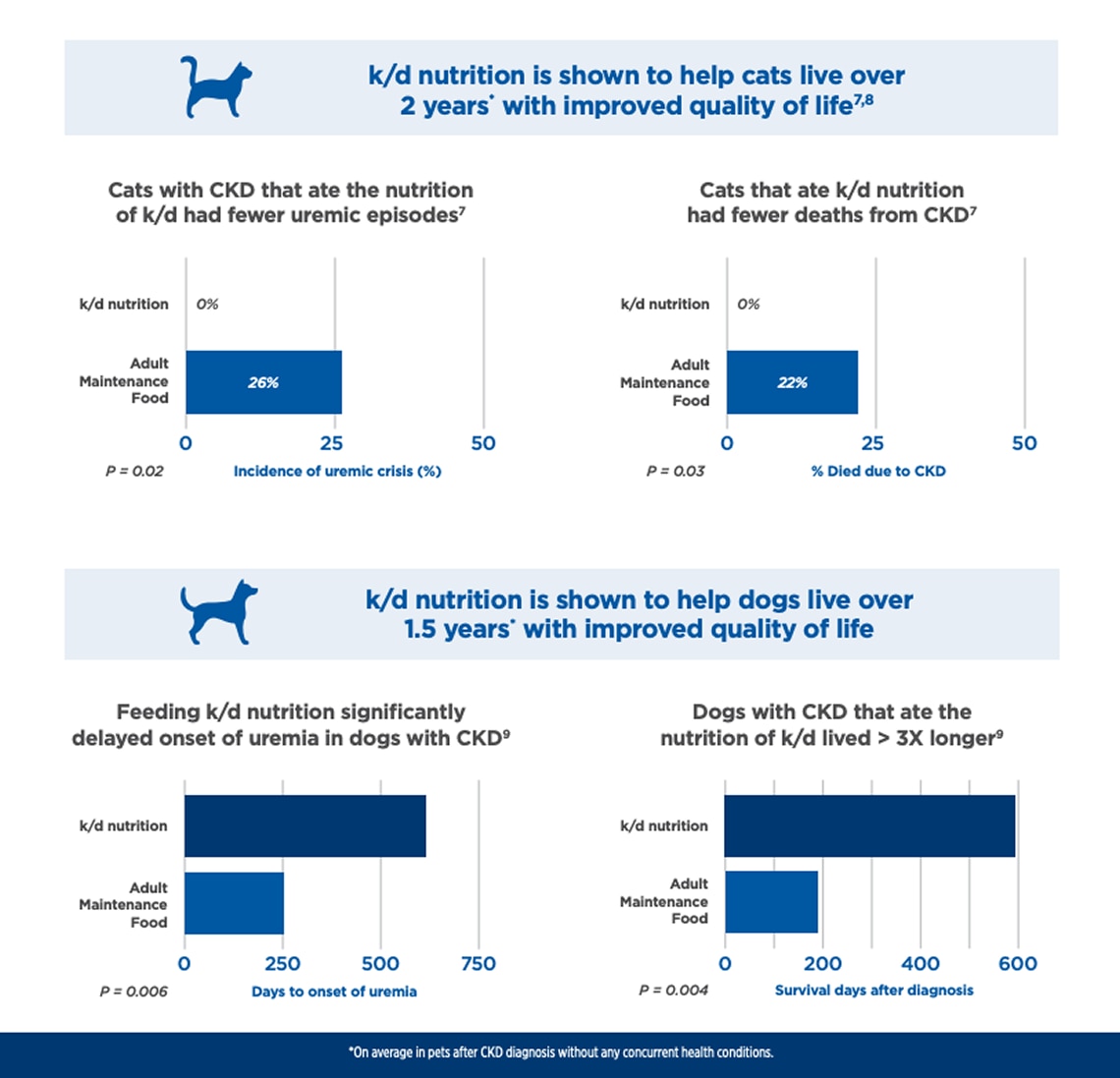
Clinical nutrition shown to help add years* and quality of life

*1.5 years on average in dogs after diagnosis with leading causes of chronic kidney issues without concurrent health issues.


Clinical nutrition shown to help add years* and quality of life

*2 years on average in cats after diagnosis with leading causes of chronic kidney issues without concurrent health issues.

Gut chart

Sign in or register to learn about breakthrough CKD management recommendations from Hill’s Pet Nutrition.

See the science behind Hill’s therapeutic renal portfolio by registering for a Hillsvet.com account.

Legal & Privacy Policy | Terms & Conditions

Up to 60% of CKD patients are missing a critical opportunity to optimize quality and longevity of life by not adopting therapeutic renal nutrition.⁶


Gut chart

Hill’s Pet Nutrition is an industry leader in taste research for pets with CKD

  • Physiological changes seen with CKD patients, including accumulation of uremic toxins, changes their taste perception
  • Hill’s uses our clinically tested E.A.T. taste enhancer technology in our therapeutic dry renal foods* to improve acceptance and food intake for pets with CKD

*E.A.T. is in k/d and k/d + j/d dry foods only.

Gut chart

Hill's Prescription Diet k/d nutrition offers targeted support to help slow CKD progression and improve the length and quality of life for pets:

  • Helps protect vital kidney function with reduced phosphorus and sodium
  • Features ActivBiome+ Kidney Defense, a proprietary blend of prebiotics shown to activate the gut microbiome and reduce uremic toxins that worsen clinical signs & accelerate progression of CKD
  • Helps cats live 2 years* after CKD diagnosis and improves their quality of life
  • Helps dogs live 1.5 years** after CKD diagnosis and improves their quality of life

*On average in cats without any concurrent conditions.

**On average in dogs without any concurrent conditions.

Gut chart


Hill’s Pet Nutrition is a leader in microbiome research for pets with CKD.

Hill's therapeutic renal foods contain our exclusive ActivBiome+ Kidney Defense technology, shown to activate the microbiome to reduce production of uremic toxins that can worsen clinical signs of CKD and accelerate disease progression.
ActivBiome+ Kidney Defense works with the microbiome of the pet to:
 
INCREASE:
 
  • Antioxidants
  • Beneficial gut bacteria
  • Body mass
     
DECREASE:
 
  • Markers of inflammation
  • Oxidative stress
  • Uremic toxin concentrations
Gut chart
Gut chart

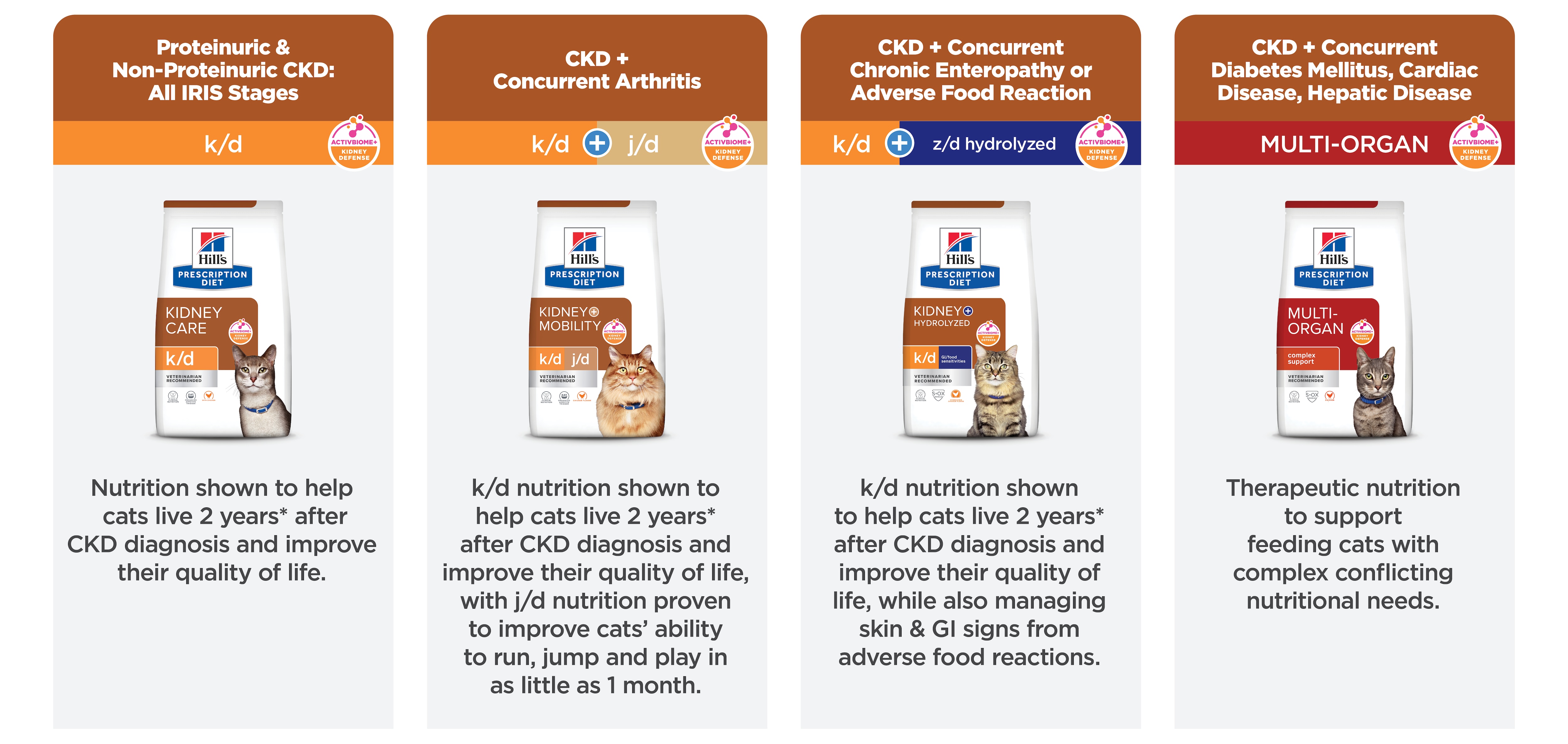
Choosing Nutrition for Cats with CKD

Gut chart

*On average in cats diagnosed with CKD without concurrent conditions


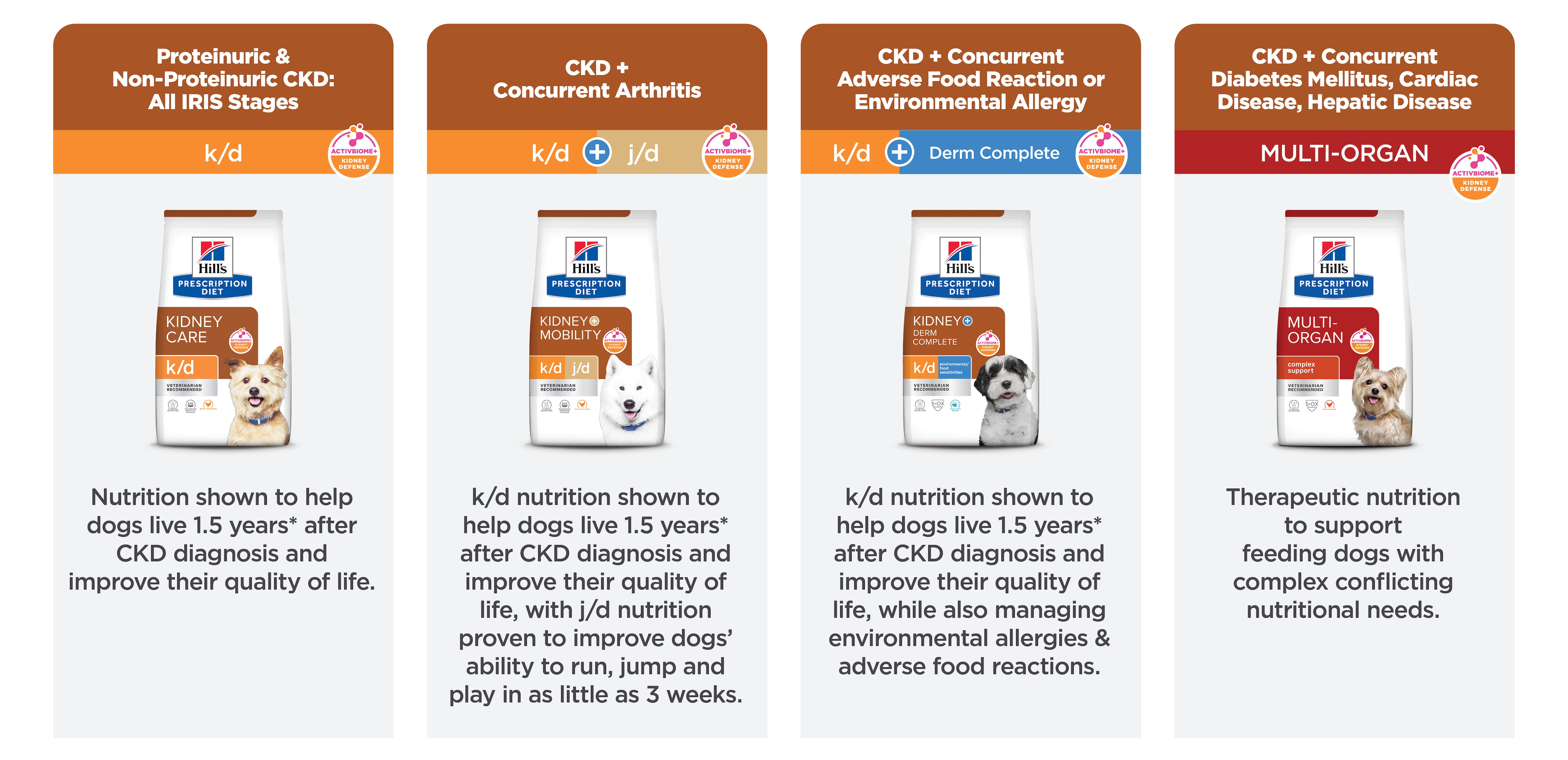
Choosing Nutrition for Dogs with CKD

Gut chart

*On average in dogs diagnosed with CKD without concurrent conditions

Questions? We have answers.

Our free consultancy service for veterinary professionals can help. Contact us and we'll help find the right Hill’s pet foods for your patients.


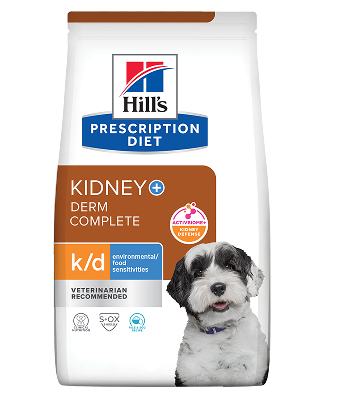
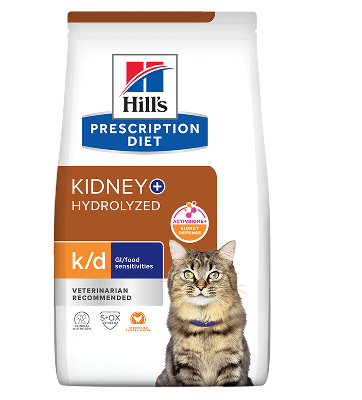
Hill's renal portfolio

REFERENCES:

  1. INDEXX Laboratories, Inc. (2015). Breakthrough SDMA Kidney Function Test Now Available from IDEXX. https://ir.idexx.com/news-events/press-releases/detail/278/breakthrough-sdma-kidney-function-test-now-available-from-idexx.
  2. Lulich, J. P., Osborne, C. A., O’Brien, T. D., & Polzin, D. J. (1992). Feline renal failure: questions, answers, questions. Compendium on Continuing Education for The Practicing Veterinarian, 14(2), 127153.
  3. Pedrinelli, V., Lima, D. M., Duarte, C. N., Teixeira, F. A., Porsani, M., Zarif, C., Amaral, A. R., Vendramini, T. H. A., Kogika, M. M., & Brunetto, M. A. (2020). Nutritional and laboratory parameters affect the survival of dogs with chronic kidney disease. PloS One, 15(6), e0234712. https://doi.org/10.1371/journal.pone.0234712
  4. Summers, S. C., Quimby, J. M., Isaiah, A., Suchodolski, J. S., Lunghofer, P. J., & Gustafson, D. L. (2019). The fecal microbiome and serum concentrations of indoxyl sulfate and p-cresol sulfate in cats with chronic kidney disease. Journal of Veterinary Internal Medicine, 33(2), 662669. https://doi.org/10.1111/jvim.15389
  5. Chen, C. N., Chou, C. C., Tsai, P. S. J., & Lee, Y. J. (2018). Plasma indoxyl sulfate concentration predicts progression of chronic kidney disease in dogs and cats. Veterinary Journal, 232, 33–39. https://doi.org/10.1016/j.tvjl.2017.12.011
  6. Vertloo, L. V., & Carnevale, J. (2026, March). Renal Dysfunction in Dogs and Cats. Merck Veterinary Manual. https://www.merckvetmanual.com/urinary-system/noninfectious-diseases-of-the-urinary-system-in-small-animals/renal-dysfunction-in-dogs-and-cats.
  7. Ross, S. J., Osborne, C. A., Kirk, C. A., Lowry, S. R., Koehler, L. A., & Polzin, D. J. (2006). Clinical evaluation of dietary modification for treatment of spontaneous chronic kidney disease in cats. Journal of the American Veterinary Medical Association, 229(6), 949–957. https://doi.org/10.2460/javma.229.6.949
  8. Coyne, M., Szlosek, D., Webeck, J., Feliciano, R., Berger, N., Doukas, J., Denton, D., Zhang, L. Y., Holt, N., Michael, H., O'Kell, A. L., Riggott, J., Sweet, S. L., & McCrann, D. J. (2026). Use of a veterinary therapeutic renal diet in cats with early chronic kidney disease is associated with slower disease progression and improved survival. Journal of the American Veterinary Medical Association, 264(5), 590–598. https://doi.org/10.2460/javma.25.10.0665
  9. Jacob, F., Polzin, D. J., Osborne, C. A., Allen, T. A., Kirk, C. A., Neaton, J. D., Lekcharoensuk, C., & Swanson, L. L. (2002). Clinical evaluation of dietary modification for treatment of spontaneous chronic renal failure in dogs. Journal of the American Veterinary Medical Association, 220(8), 1163–1170. https://doi.org/10.2460/javma.2002.220.1163